3 Strength Days. 3 Mobility Days. 6 Weeks. Intentional Movement Medicine.
5 weeks of progressive strength, mobility, balance and core work — followed by a Week 6 deload, because recovery is part of the programming, feeling more capable and more mobile than ever before .
Minimal equipment. Video instruction for every movement. A plan you can actually finish.
★★★★★ 4.9/5 · 2,847 · 20+ years of clinical practice
$47 today (normally $197) · Instant access · 30-day guarantee
Nobody Quits Training Because They're Lazy.
Twenty years of assessing people — post-op patients, athletes and a lot of ordinary adults with cranky knees — and the pattern almost never changes.
People don't stop because they lack discipline. They stop because nothing they were doing added up to anything.
Six months of effort, no clear progression, no way to tell whether any of it worked. That's not a willpower problem. That's a programming problem.
A workout is a single session. A program is a sequence where each session sets up the next one.
Most people have spent years doing the first thing and calling it the second.
Here's What's Actually Happening Right Now.
- There's no direction, so there's no momentum. An app this month. A YouTube workout next month. A gym membership that lapses in March. We never stay anywhere long enough for anything to compound.
- You're training hard, but nothing progresses. Effort isn't the missing piece — you've got plenty of that. What's missing is a plan that gets harder in a deliberate order. Without it, you're repeating week one for years.
- You're following exercises without knowing why. Which means when something feels wrong, or too easy, or your shoulder objects on Tuesday, you have no way to adjust. So you either push through it or stop. Usually stop.
What Another Year Of This Actually Costs.
- Twelve more months of starting over. Not twelve months of nothing — twelve months of genuine effort that never accumulated. That's the expensive part.
- Your capacity narrows quietly. It doesn't announce itself. You just stop doing a few things. Sitting on the floor. Carrying both bags in one trip. The hike you used to say yes to. Nothing dramatic, and that's exactly why it goes unnoticed.
- You stop trusting yourself to stick with things. After enough abandoned programs, "I'll start Monday" stops meaning anything — even to you. That belief is harder to rebuild than the strength is.
Here's What Becomes Possible In 42 Days.
- Strength that shows up outside the workout. The whole strength block is built around fundamental, practical movements — the patterns you already use to lift, carry, push, climb, and get off the floor. Train those and the carryover is immediate, because you're just getting stronger at things you already do.
- Better mobility, balance, and body awareness. Three sessions a week are dedicated to the work that usually gets skipped — mobility, balance, core control, and reconnecting with how your body actually moves. It's the part that keeps the strength usable.
- A routine that survives a bad week. Six weeks is short enough to finish and long enough to change something. And because you'll understand the reasoning — sets, reps, recovery, how to pick your resistance — Day 43 isn't a cliff. You'll know how to keep going.
Introducing:
The Complete Home Training System
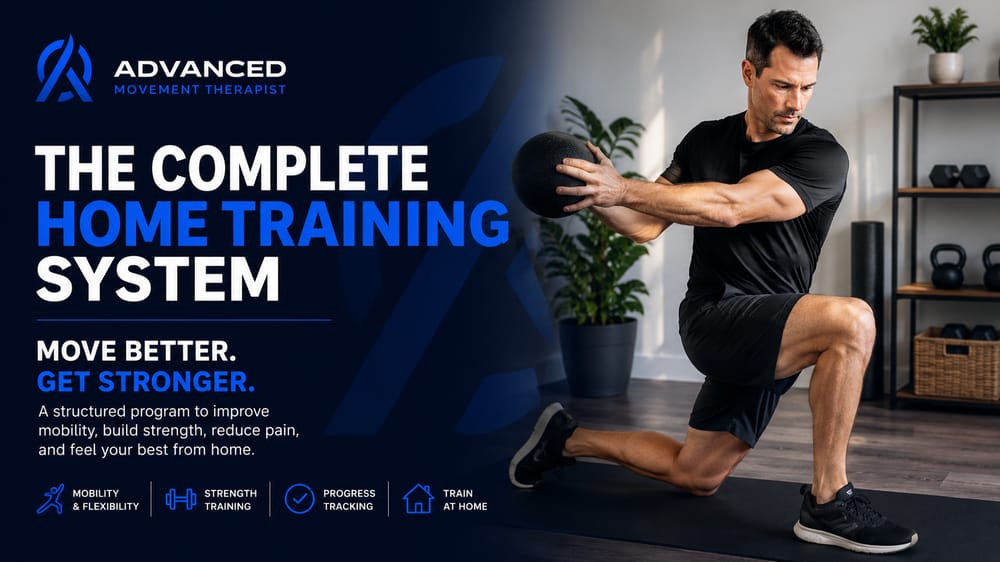
A 42-day progressive program built on fundamental, practical movement — designed to be scaled, understood, and finished.
This isn't a workout library. Nobody needs more workouts.
It's a sequence. Five weeks of structured training where each week builds on the last, followed by a Week 6 deload and active recovery block. Every week alternates between two kinds of sessions — three strength days and three lower-intensity mobility days — so your body gets to train, move, and recover instead of just absorbing more punishment every time.
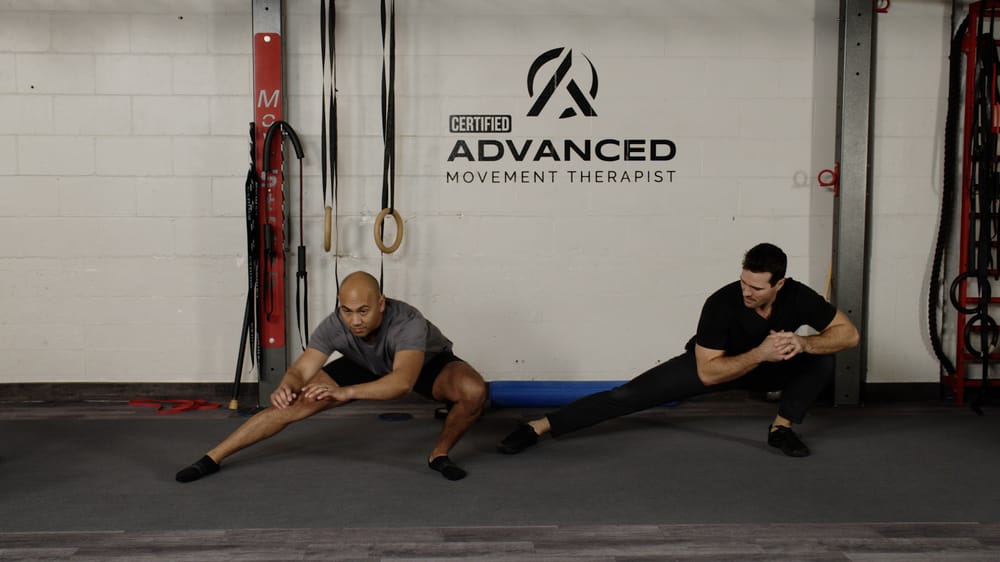
And every session comes with video instruction from me, walking through how each movement should be performed and why it's there. That last part matters more than people expect. When you understand the logic, you can scale the resistance, adjust for a stiff morning, and keep training long after the 42 days are done. That's the actual goal here: not a hard six weeks, but a training practice you can continue.
The 4 Core Components
01 · Fundamental Practical Strength (FPS)
— 3 days per week
Strength-focused sessions built on the movements that carry over to real life. Progressive across all five weeks, developing strength, movement competency, and work capacity in that order. What you get: strength you notice outside the session.
02 · Mobility, Balance Core (MBC)
— 3 days per week
Lower-intensity work on mobility, balance, core control, and recovery. The sessions most programs leave out, which is exactly why most people plateau. What you get: better movement quality, better body awareness, and strength you can actually access.
03 · Five Weeks Of Deliberate Progression
The sessions alternate through the week so that hard days and easy days sit where they should. Nothing escalates randomly. Each week is deliberately harder than the one before it, with clear guidance on sets, reps, recovery, and how to choose the right resistance for you. What you get: progress you can point at, rather than effort you can only feel.
04 · Week 6: Deload Active Recovery
A full week of reduced load and active recovery, programmed in from the start. What you get: this is the tell. Deloads are how professionals program — and they're the first thing cut from programs designed to look impressive rather than work. Adaptation happens during recovery. Week 6 is where the previous five weeks actually land.
People Who Finally Finished Something.
"Finally, a program that made sense."
Four programs in two years, never finished one. This time I finished all 42 days. Went from bodyweight squats to 45lb goblet squats, and I can actually get off the floor without thinking about it. First time training has felt like it was building toward something instead of just existing week to week.
— Sarah M., 42, Toronto
"I actually understand what I'm doing now."
I've been training for years but never had a structured plan. This filled that gap completely. The mobility work alone changed how I move day to day. Being able to scale everything to my level meant I didn't have to choose between "too easy" and "injured." I'm stronger, my movement feels better, and I'm not guessing anymore.
— James K., 48, Vancouver
"Six weeks felt short, but it changed everything."
Honestly expected to get through it and go back to random YouTube workouts. Instead, the framework stuck. I know how to progress, I know why each session matters, and Week 6's deload actually made sense — it wasn't punishment for being weak. The manual is so clear that I kept going after Day 42. That's never happened before.
— Michelle T., 51, Calgary
2,847+ people through the 42 days
4.9/5 average rating
94% finish all six weeks
Train For The Long Game.
Be patient. Be consistent. Prioritize movement quality over simply doing more.
You don't need every session to destroy you to make progress — you need six weeks that are built in the right order, and the understanding to keep going once they're finished.
That's what's waiting on the other side of this button. Forty-two days, laid out in sequence, with someone explaining the reasoning the whole way through.
Instant access
·
Lifetime access
·
30-day guarantee
🔒 Secure payment
↩ 30-day money-back guarantee
👥 2,847 members
94% of members complete all six weeks
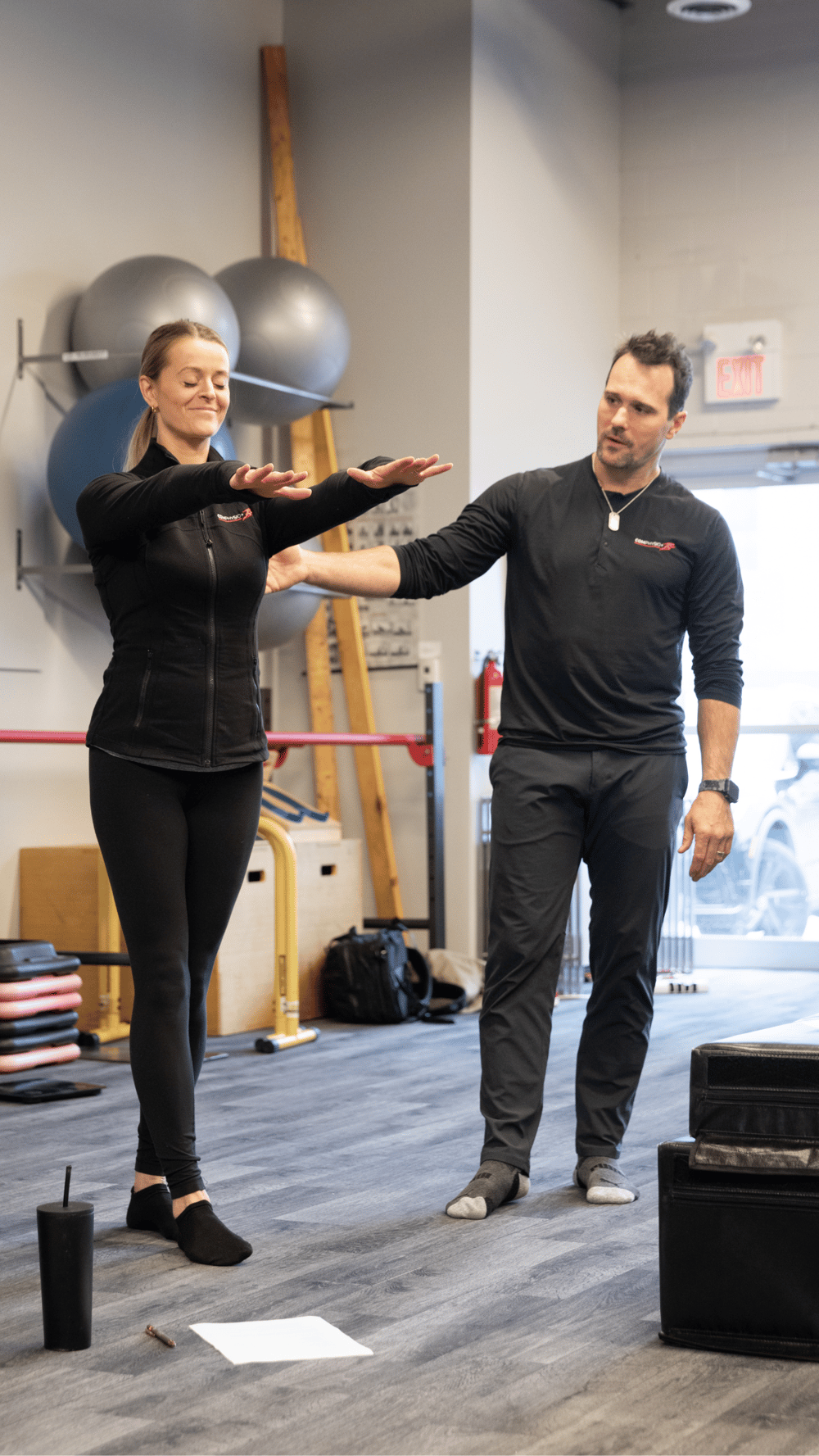
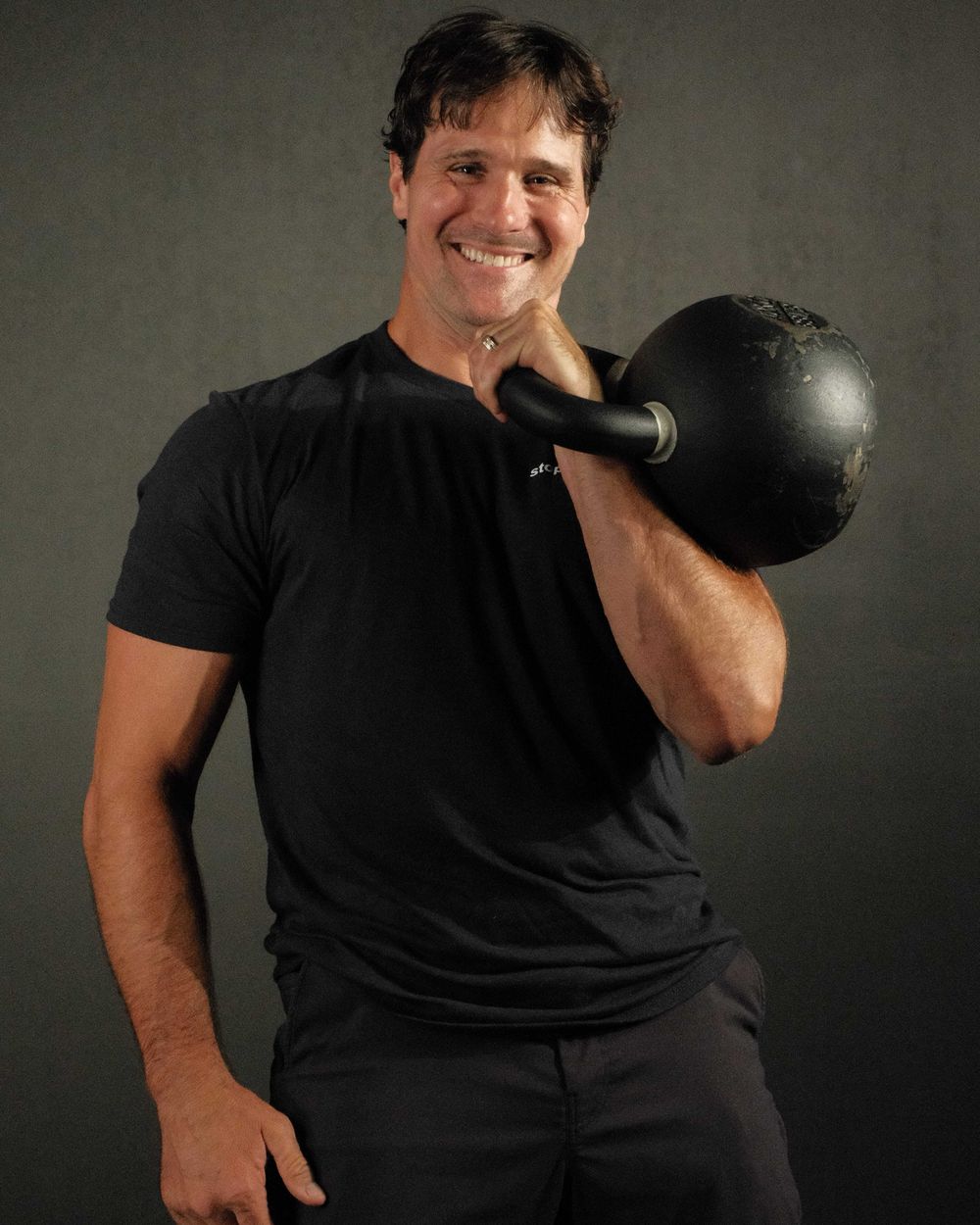
Meet Tom Swales
Founder, AMT System
A dedicated Physical Therapist and Strength Coach committed to enhancing orthopedic healthcare! With over two decades of experience, Tom has honed his expertise through working with elite athletes and clients seeking optimal performance. As the founder of the innovative AMT System, Tom simplifies complex practices, empowering his community with practical strength, functional mobility, and accelerated recovery.
Are you ready to elevate your practice, eliminate frustration, and move better?
Everything Included In The Complete Home Training System
| Component | Value |
| 42-Day Training Plan (5 progressive weeks + Week 6 deload) | $297 |
| Fundamental Practical Strength sessions (15 sessions) | $147 |
| Mobility, Balance Core sessions (15 sessions) | $147 |
| Instructional video library with Tom | $197 |
| Complete Training Manual | $67 |
| Soft-tissue prep + dynamic warm-up protocols | $47 |
| Progress Tracker | $27 |
| Resistance, sets, reps recovery guidance | $47 |
| Total Value | $976 |
The 30-Day Promise
Two decades of assessing people has taught me that the difference between the ones who get stronger and the ones who don't is almost never effort. It's whether their training was built in an order that made sense. That's what I share with you here.
So the risk is mine:
- Follow the first 4 weeks as written.
- If it isn't the clearest, most structured training you've followed, email support@amtcertified.com
- Full refund. Keep the manual.
— Tom Swales
Registered Physiotherapist · Strength Conditioning Coach · 20+ years clinical practice
🔒 Secure payment
↩ 30-day money-back guarantee
👥 Registered Physiotherapist + Strength Coach
Your Questions, Answered.
Fair question, and here's how to tell the difference without taking anyone's word for it. Look for progression that's deliberate rather than escalating — each week harder than the last in a planned order, not just longer. Look for dedicated mobility and recovery work, not a stretch tacked onto the end. Look for a deload week, which is the clearest signal of all: it's how strength is actually programmed, and it's the first thing cut by anyone building a program to look impressive rather than work.This has all three. That's what twenty years of clinical practice buys you — not exotic exercises, just the boring structural decisions done correctly.
So has most of this audience, and the reason is usually structural. Programs that run indefinitely have no finish line. Programs that only escalate break you around week four. Programs that need a full gym break the first time your schedule does.This is 42 days. It ends. Three of your six weekly sessions are deliberately low-intensity, the sixth week backs off entirely, and it runs at home with minimal equipment. It was designed to be completed — that's a design constraint, not a promise.
The program is built to be scaled. Every session comes with instruction on how the movement should be performed, plus guidance on adjusting resistance and difficulty to match your current ability — so it scales to you rather than you forcing yourself into it.Being straight with you: this is a general training program, not individualized rehab. If you're currently injured, in active treatment, or managing a medical condition, run it past the clinician who knows your history first. Honesty is more important than a promise you're not sure I can keep.
Three are strength sessions. Three are lower-intensity mobility, balance and core work — closer to movement practice than a workout. Each is about 30–40 minutes. It's structured across the week so training and recovery alternate, which is what makes six sessions sustainable where four hard ones wouldn't be.
$47 is a birthday promotion. It goes back to $197 on September 30th.What you're paying for isn't volume — you can find unlimited free exercise videos in ten seconds. You're paying for the order they're in, the rate the load increases, where recovery sits, and how to scale it to yourself. That's the part nobody gives away, and it's the only part that determines whether six weeks of effort turns into anything.
Resistance bands or tubing, a foam roller, a mini band, dumbbells or kettlebells, a Swiss ball, and enough floor space to lie down and reach. Missing something? Most exercises can be modified using alternative equipment or your own bodyweight, and the manual covers the substitutions.
Email support, answered within 48 hours. You'll also get a welcome email with quick-start tips, and access to the member resource library with additional mobility tutorials and reference videos.
Follow the first 4 weeks exactly as written. If you're not seeing progress, feeling clearer on the programming, or noticing that this is the most structured training you've actually stuck with, email support. Full refund, no questions. You keep the manual.
Here's Exactly What You Get.
STEP 1 · Instant Access
Login arrives within 60 seconds. Everything unlocked immediately — the full manual, all six weeks, every video. No drip, no waiting. You can start today if you want to.
STEP 2 · Set Up Read The Plan
The training manual walks you through the structure, how to choose your starting resistance, and how to set up your space. 15 minutes. Do this before Day 1 and the whole thing runs smoothly.
STEP 3 · Run Week One
Three FPS sessions, three MBC sessions, alternating. Soft-tissue prep and a dynamic warm-up are built into each one — you're not left guessing what to do before you start. Video for every movement, every rep.
STEP 4 · Progress Through Weeks 2–5, Then Deload
The load and difficulty step up each week. You log it in the progress tracker as you go, so by Week 6 you can see the whole arc — and Week 6 is where you back off, recover, and let it consolidate.
Your Complete Package Includes:
- Your complete 42-day training plan — every session, in order
- 5 weeks of progressive strength and movement programming — FPS and MBC, sequenced
- Week 6 deload and active recovery guidance
- Instructional training videos with Tom — every movement demonstrated and explained
- Soft-tissue preparation techniques
- Dynamic warm-up and movement preparation
- Mobility, Balance Core sessions
- Complete training manual
- Progress tracker
- Guidance on sets, reps, recovery, and choosing your resistance — so you can scale it to you